From a generic chat to an AI demo running on their own safety manuals
The brief
An online training academy brought me in as an instructor to teach the hands-on sessions of an AI program aimed at a company in the oil shipping sector. The training, subsidized through FUNDAE (Spain's publicly subsidized workplace training scheme), was delivered in a virtual classroom — online and live — in three one-hour sessions, one per week, between June and July 2026.
The goal was for the team to finish knowing how to apply AI to their specific operations — those of a shipping company, with its manuals, its processes and its regulatory framework — not to generic examples.
The challenge
- The group arrived with very different levels: from people who had barely opened an assistant to people who already used several tools every day. The training had to offer something to both.
- It is a very specific and highly regulated sector — maritime safety, audits, regulatory manuals — and foreign to any AI instructor. The risk was staying generic, with nothing landing in their reality.
- The sessions fell during working hours, so of the sixteen people in the group, between eight and ten attended, and not always the same ones. Each session had to stand on its own, without taking the previous week for granted.
- Their real need wasn't in the syllabus: it came up by listening to them. Managing living documentation, with cross-references between manuals and changes that come in from regulation, was what was really eating up their time.
What I taught
The program went from the general to their own case: it started with the tool ecosystem and ended by solving, live, their specific documentation problem.
The AI ecosystem applied to their day-to-day
We went through the Anthropic ecosystem and its different tools. I built a first useful automation live — a daily summary of emails including the content of their attachments — and explained the concepts behind it: connectors, the MCP protocol and API access.
A demo running on their own manuals
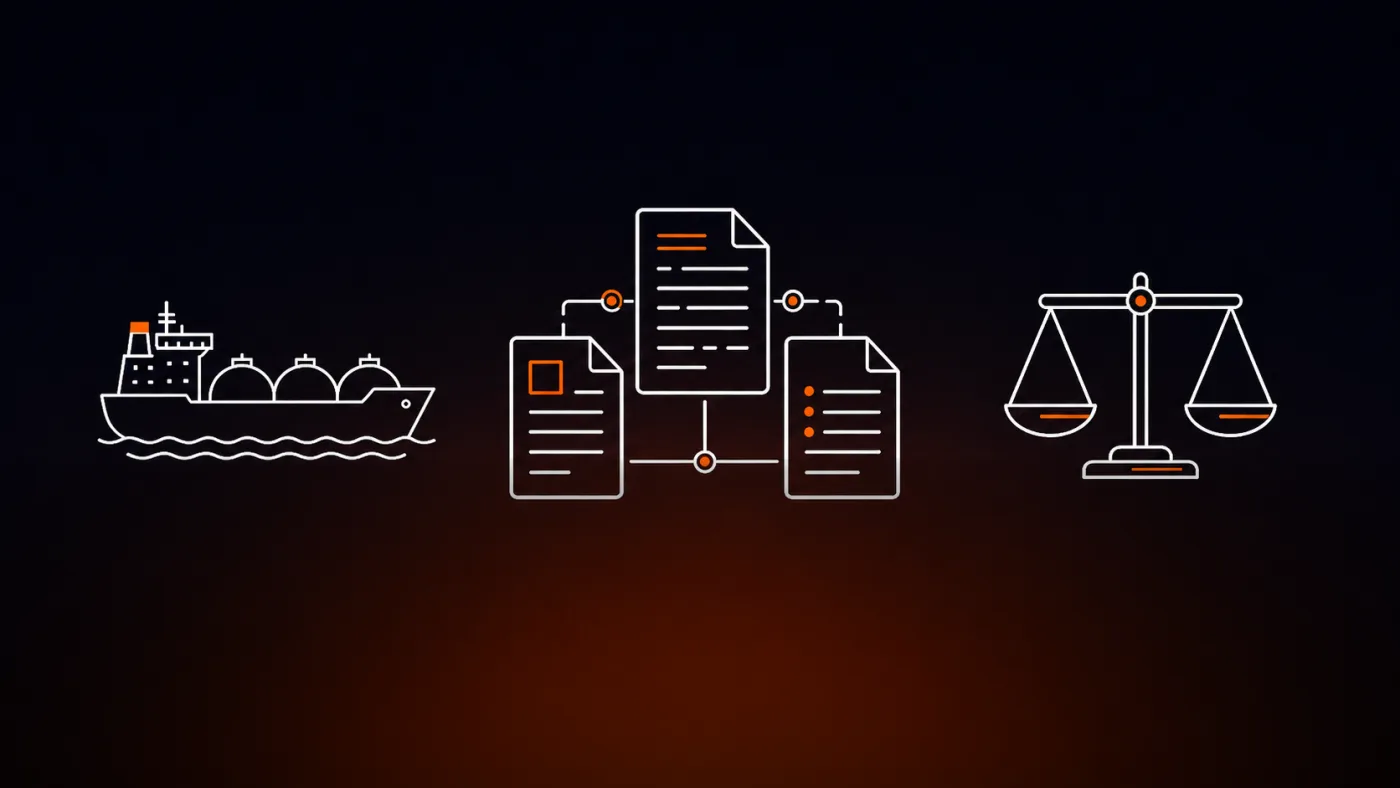
This was the centerpiece. I rebuilt their real case with a sample system of manuals of the same type as theirs — safety management, engine room and cargo operations — and, with Claude Cowork, showed the full cycle: automatically generating the cross-reference table, analyzing which sections a change affects, editing the document with tracked changes so a person can validate it, and simulating the arrival of a new regulation by propagating the impact across all the connected documents.
Along the way, the system detected on its own an existing inconsistency in the references that nobody had asked it to look for.
A tool catalog pared down for their sector
A map of tools by category — conversational assistants, research, presentations, automation and programming — from which I deliberately removed everything that doesn't help them, such as image and video, to leave only what fits their work.
Compliance: AI Act and data protection
The EU AI Act brought down to their case: risk levels, transparency obligations, application timeline and penalties, with a tool to self-assess a specific use case. And the data side: Enterprise accounts versus use of the API, the role of the data processing agreement (DPA) and the most common mistakes when using AI with sensitive information.
The result
- The team didn't leave with an abstract idea of AI, but with a demo running on a case identical to theirs and a clear path to bring it to their real documentation.
- The demo found a real inconsistency in the cross-references without anyone asking it to. It is the best proof of what this is for in documentation that has to add up.
- They left knowing how AI fits into their specific operations, which was what concerned them most, and not into examples from another sector.
- And they left knowing what the AI Act requires of them: which risk level their use cases fall into, what obligations they have and from when.
What I needed from the client
- The syllabus and the objectives of the training program, which were already defined by the program.
- The virtual classroom platform and the session schedule.
- Their knowledge of the business: the part that made the course land came from listening to them describe how they manage their documents and processes today. No prior work on their part beyond that.